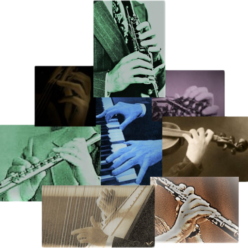
CONSIDERATIONS ABOUT THE MUSICIAN’S FOCAL DYSTONIA
© Alessandro Bares, 2026
The musician’s focal dystonia is a particular condition, often difficult to understand both for those who suffer from it and for those observing from the outside. This naturally creates confusion, much like other difficulties that affect the way the brain processes information or coordinates movement. When science does not yet offer a simple, definitive explanation, there will always be someone ready to dismiss everything as “obsessions,” “paranoia,” or worse—as if an invisible difficulty were merely an excuse to avoid something.
Behind such judgments there is often a cultural idea—very European in nature—that being able to do something is a moral virtue, and not being able to do it is a fault. When a person suddenly encounters a new limitation, especially if it concerns their work or talent, they are often viewed with suspicion.
In recent years, however, the most widely shared opinions among neurologists and researchers agree on several fundamental points:
- focal dystonia is a neurological movement disorder,
- it is not caused by damage to nerves or muscles,
- it does not stem from stress, emotions, or psychological issues, even though these can amplify its symptoms.
To arrive at a diagnosis, doctors first rule out peripheral neuropathies and tissue injuries: technically, the movement is possible. But when the person performs a highly specialized gesture—such as playing an instrument—involuntary contractions, loss of fine control, and unwanted movements appear.
This is what characterizes focal dystonia: a difficulty in accessing the right movement at the right moment—not because of a lack of muscular ability, but because the internal representation of that movement within the central nervous system has changed in a dysfunctional way.
A metaphor may help.
In some learning conditions, such as dyslexia, the path connecting one concept to another does not always follow the “direct route” used by most people. The brain finds alternative routes—sometimes surprising ones. This image does not describe dystonia clinically, but it does give an idea of what it means when the system chooses less effective paths.
In dystonia, however, the problem is not a “non-conventional way of thinking,” but rather an ineffective reorganization of movement itself: a kind of motor “map” that has become distorted over time. As a result, a habitual gesture—lifting a finger, bending the wrist, controlling a pressure—comes out differently from what the person intends.
It is important to distinguish this condition from other issues.
If a finger does not move because a nerve is damaged or a muscle is torn, we are dealing with a structural pathology.
If, instead, the movement is intact but loses precision only in a musical or professional context, then we are within the realm of focal dystonia, a dysfunction of the motor circuits that govern highly specialized skills.
In the past, many interpreted dystonia as a psychosomatic disorder. But direct experience shows that a vacation or a period of rest is not enough to restore freedom of movement: the problem persists because its roots lie in the neurophysiological mechanisms of motor control.
Why, then, does the “right” movement fail to appear at the moment it is needed?
The answer is complex and involves the deeper workings of the nervous system—and this very complexity explains why recovery paths must be equally nuanced.
In the next chapter, I will enter the heart of this question, looking more closely at movement and its transformations.